Unlocking the Hidden Potential of LPG as a Practical and Scalable Solution Today for Maritime Decarbonisation by Constantinos Chaelis, Global Gas Segment Director, Lloyd’s Register
 As the maritime sector accelerates its transition toward lower‑carbon operations, one truth is becoming increasingly difficult to ignore: while the regulatory landscape ahead remains unclear, the industry cannot afford to wait before taking meaningful action. The scale of the decarbonisation challenge demands viable solutions that can be deployed now, at scale, without compromising safety, reliability and commercial performance in global shipping trade. LPG stands out as a solution capable of meeting that brief.
Lloyd’s Register’s newly updated Fuel for Thought: LPG report, produced in partnership with the World Liquid Gas Association (WLGA), reinforces LPG’s position as a practical, technically proven and commercially compelling pathway for shipowners and operators seeking immediate emissions reductions. At a time when regulatory pressure is intensifying and compliance timelines are tightening, LPG offers a compelling advantage in the alternative fuels landscape: availability, readiness and affordability coupled with significantly lower GHG emissions on a Well-to-Wake (WtW) perspective.
A Mature Fuel with a Global Footprint
Unlike many emerging fuels that require extensive infrastructure build‑out, LPG benefits from a global supply chain that is already well established. More than 1,600 LPG carriers operate worldwide, supported by over 1,000 storage facilities and terminals. This existing network provides a level of availability and reliability that few alternative fuels can match.
For shipowners, this matters. Fuel decisions are not made in isolation - they hinge on confidence in supply, cost stability and long‑term accessibility. LPG’s maturity across all three dimensions gives it a distinct advantage, enabling operators to adopt lower‑carbon propulsion without the uncertainty that often accompanies newer fuel options.
Immediate Emissions Reductions Without Operational Compromise
The environmental case for LPG is equally compelling. Compared with heavy fuel oil, LPG emits around 97% less sulphur oxides, 90% less particulate matter and approximately 20% less carbon dioxide. Lifecycle greenhouse gas emissions can be reduced by up to 17% compared with marine gas oil. These reductions are not theoretical - they are proven in service today.
This performance positions LPG as a practical route to improving compliance with key regulatory measures such as the Energy Efficiency Existing Ship Index (EEXI), the Carbon Intensity Indicator (CII), and regional frameworks including the EU Emissions Trading System and FuelEU Maritime. For many operators, LPG offers a cost‑effective way to bridge the gap between current operations and the more stringent requirements that lie ahead.
A Proven Technology Ready for Wider Adoption
Dual‑fuel LPG propulsion is present for the long term as a well-established engine technology in the gas carrier segment, with a growing fleet and a strong orderbook. Yet gas carriers represent only a small fraction of global shipping emissions. The real opportunity lies in cross‑segment adoption - container ships, bulk carriers, general cargo vessels and other ship types that collectively account for the majority of maritime emissions.
The updated report highlights that many of these vessels are technically capable of conversion to LPG propulsion. Retrofit pathways are more accessible and cost‑effective than those associated with other alternative fuels. For shipowners seeking to extend vessel lifespans while reducing carbon exposure, LPG retrofits offer a pragmatic solution.
Commercial Viability in a Cost‑Conscious Industry
Decarbonisation is not only an environmental imperative, it is a also commercial one. Rising carbon pricing, tightening regulations and shifting customer expectations are reshaping the economics of global shipping. In this context, LPG’s commercial advantages are significant.
Lower capital expenditure compared with other alternative fuels, competitive fuel pricing in key regions and reduced carbon cost exposure all strengthen LPG’s appeal. For many operators, LPG represents a rare alignment of environmental benefit and economic logic.
A Fuel with a Long‑Term Future
While LPG’s immediate benefits are clear, its long‑term potential is equally important. Renewable LPG (rLPG) and bio‑LPG - chemically identical to conventional LPG - can be used as drop‑in fuels without modification. Depending on feedstock, these renewable variants can deliver up to 80% emissions reduction.
Industry projections suggest that rLPG could meet up to 50% of global demand by 2050. This creates a credible pathway toward near‑zero‑emission operations without requiring a wholesale shift in onboard technology or infrastructure. For shipowners wary of stranded assets, this continuity is invaluable.
The report also explores the potential of pairing LPG with onboard carbon capture systems. Because LPG combustion already produces lower CO₂ volumes, onboard storage requirements are reduced, improving the feasibility and economics of carbon capture. This combination could extend vessel lifespans and further reduce exposure to carbon pricing mechanisms.
Addressing the Remaining Barriers
No fuel pathway is without challenges. The regulatory framework for LPG bunkering is still evolving, and engine options - particularly beyond two‑stroke applications—require further development. Wider adoption will depend on how quickly these gaps are addressed.
However, the fundamentals are strong. Global seaborne LPG trade reached a record 145 million tonnes in 2025 and continues to grow. Around 500 existing LPG terminals could become bunkering points for non‑gas carriers with minimal investment. The momentum is already building.
A Call to Action for the Maritime Sector
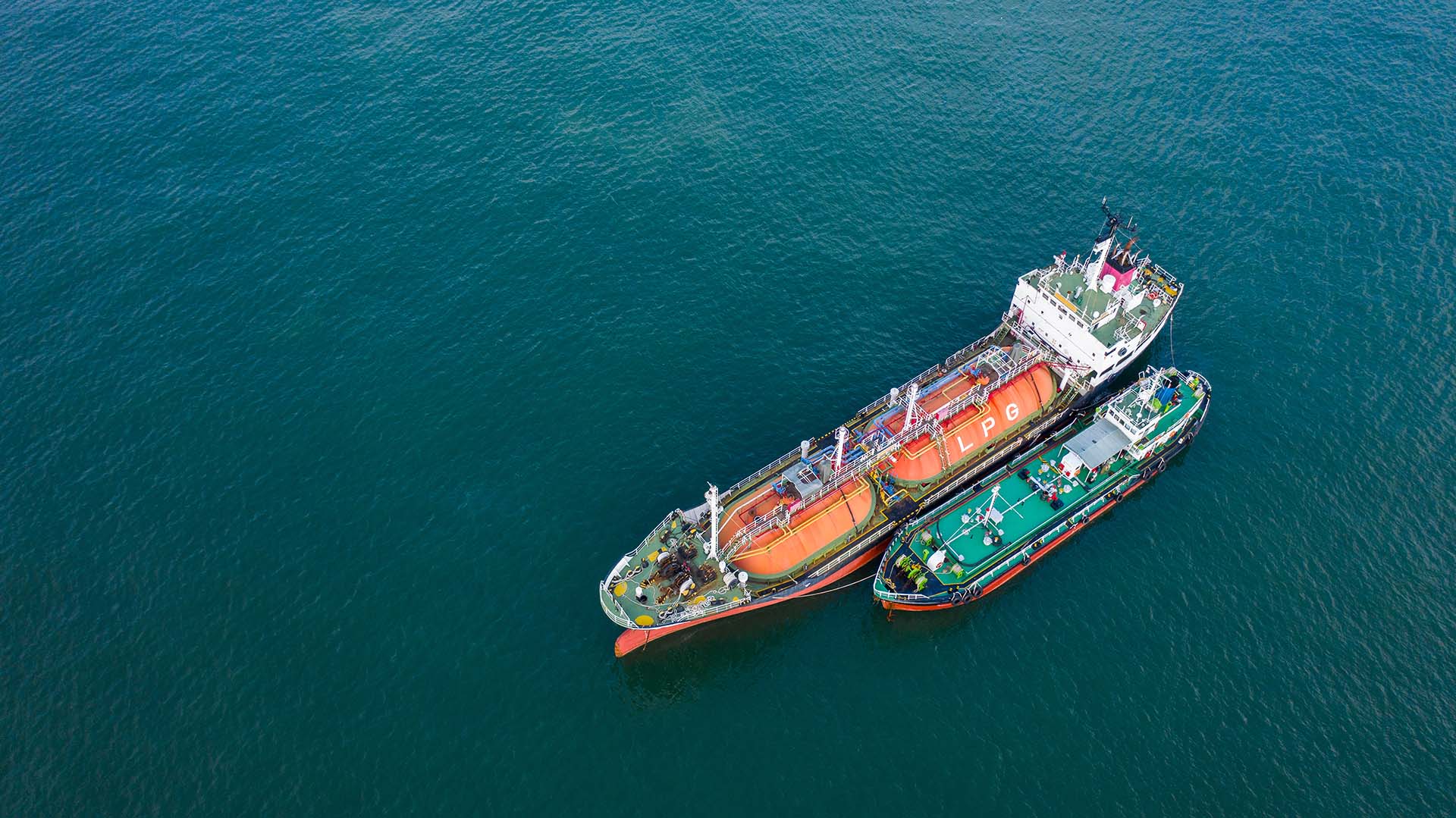 As the industry marks LPG Day on 7th June, the strategic imperative is clear: the maritime sector must accelerate decarbonisation through solutions that are technically proven, commercially viable and globally scalable. LPG meets this requirement today. Its established infrastructure, strong market fundamentals and clear pathway toward renewable and near‑zero‑emission variants position it as a strategic asset for shipowners and operators navigating an increasingly complex regulatory and economic landscape.
By recognising and acting on LPG’s hidden potential, the sector can take decisive steps toward a lower‑carbon future while safeguarding operational resilience and long‑term competitiveness. LPG provides a bridge between today’s operational realities and tomorrow’s climate ambitions. The opportunity is here. The infrastructure is ready. The technology is proven. What remains is a wider cross-segment adoption and development.
Read the Fuel for Thought: LPG report