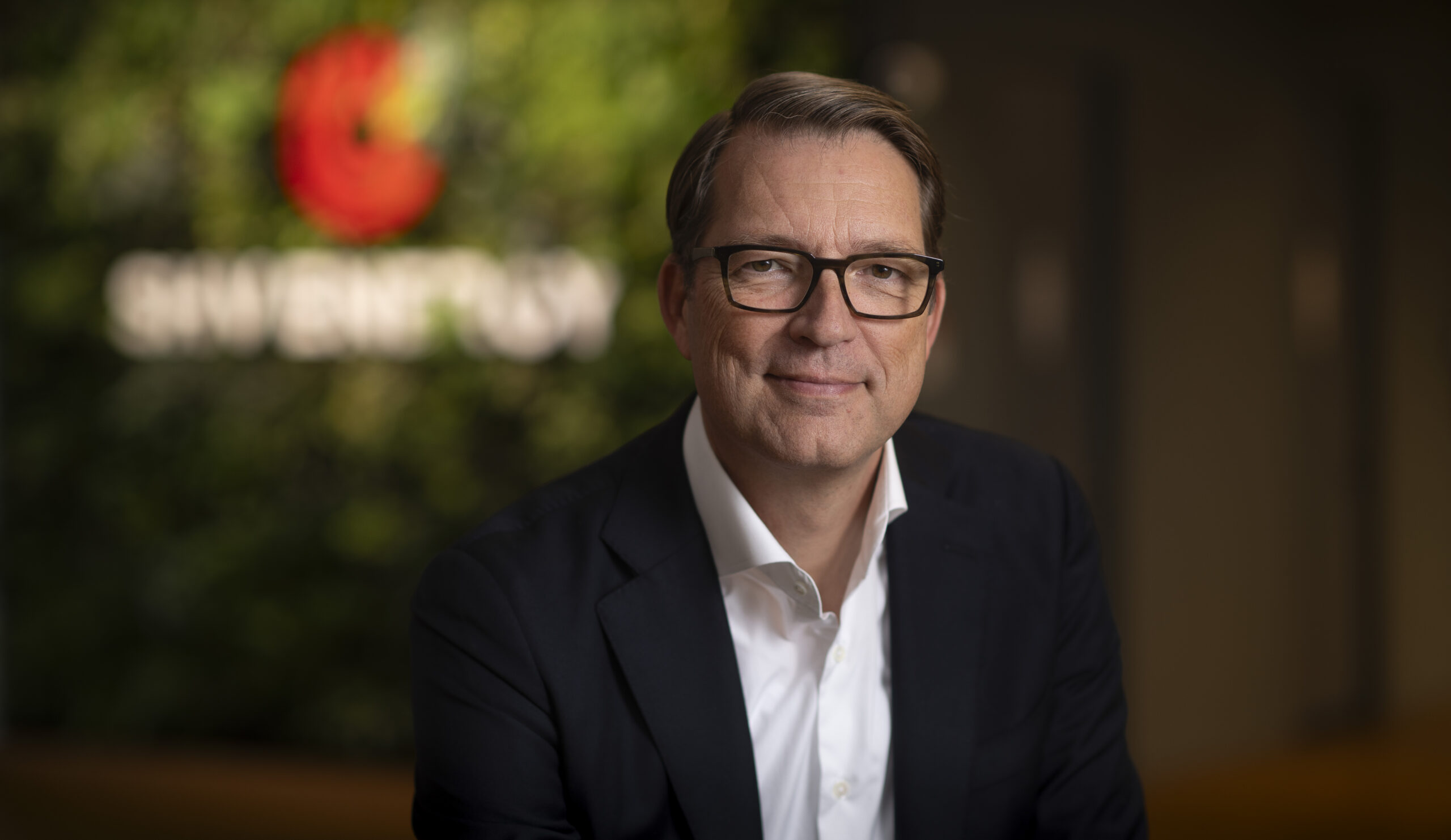
The Voice Of Patrick van der Voort, CEO, SHV Energy, and WLGA Board member
Why resilience matters more than ever
The Voice spoke with Patrick van der Voort, CEO of SHV Energy, WLGA Board member, and Leadership Partner, about resilience, energy security, and the growing role of renewable liquid gases in the global energy transition.
 The Voice: In your roles as CEO of SHV Energy, WLGA Board Member, and participant in the WLGA Leadership Programme, how do you see the role of the Liquid Gas industry evolving in the global energy transition over the coming years?
We should be proud of the role the liquid gas industry plays today, and confident about the contribution it will make in the future. We serve businesses and families in cities and remote areas. They choose liquid gas as their preferred source of energy because it is safe, reliable, cleaner, affordable, and accessible.
Recent events and related supply chain disruptions have also highlighted the importance of liquid gas as part of the overall energy mix. Our customers, but also increasingly governments and international agencies, have seen that liquid gas is flexible, storable and available when they need it most.
In the light of geopolitical developments and other macroeconomic factors, we have seen the debate shift in a different direction: how do we reduce emissions while also strengthening energy security and keeping energy affordable?
We recognise that no single solution will meet the needs of every customer, geography, or sector. The future energy mix will therefore be defined by diverse solutions meeting different needs. Given the need for resilience, liquid gas will play an even stronger role than what it is already playing today.
The WLGA has a unique opportunity to continue to shape this conversation. We have a compelling story to tell and strong evidence to support it.
TV: SHV Energy is accelerating the transition towards renewable liquid gases. How do you see the role of these alternatives evolving, and what challenges must be overcome to scale them globally?
We believe we should add significant value in the global energy transition, which is perhaps one of the most ambitious undertakings of our time. We are currently selling a modest amount of bioLPG to mainly small industries and businesses that are looking for practical ways to reduce emissions. Its compatibility with current supply chains, infrastructure and equipment makes it one of the most practical renewable energy solutions available today.
But we obviously need to look beyond that.
When we look at Europe, we know that more than 137 million Europeans live in rural areas. Many of these communities face different energy challenges to those in cities, including limited access to gas networks and practical lower-carbon alternatives.
Electrification will undoubtedly play an important role in decarbonising. But it is also clear that we see great demand and opportunity for alternative and resilient solutions through renewable liquid gases, which work with existing applications and infrastructure.
We are working to accelerate the development of renewable liquid gases through targeted projects and partnerships. In these emerging value chains, producers and financial institutions need confidence that long-term demand will justify investment in new production capacity. That confidence comes from two places: a policy environment that rewards commitment, and partners across the value chain willing to enter long term off take agreements.
SHV Energy positions itself as an off-taker. We are prepared to take financial risk and commit to long-term agreements, often the missing link in energy transition projects. As distributors and off-takers, we are forming consortia to enable rLG production pathways using sustainable feedstocks ranging from renewable alcohols to agricultural residues and waste plastics.
As one example, I recently attended the groundbreaking of a Sustainable Aviation Fuel (SAF) plant in the Netherlands, the latest milestone in a relationship with SkyNRG that began seven years ago. Early engagement helped unlock the potential of bioLPG as a by-product of the SAF production process, extending the benefits beyond aviation. Most of the new projects and value chains, however, remain challenging from an economic feasibility point of view, and we need supportive policy to make them work.
Through Liquid Gas Europe we propose a renewable heat obligation, a mandated share of renewable liquid gases within LPG used for domestic, commercial, and industrial heating. This would put off-grid heating on a clear decarbonisation trajectory and give producers and distributors the certainty they need to invest and scale up.
TV: SHV Energy operates across diverse markets worldwide. What are the main strategic pillars driving the company’s growth and transformation today?
SHV has spent 130 years adapting to changing customer needs, markets and energy systems. Our history shapes how we think about growth today. It is not about defending market position; it is about earning it with every new generation.
With 26 million customers across 21 markets, that means expanding access to lower-carbon, reliable energy where LPG can transform daily life, while accelerating rLGs for customers further along their transition.
Most importantly, we measure success through more than financial performance alone. Our ambitions are clear: keeping people safe and healthy, creating loyal customers, growing renewable liquid gases and continuously improving how we operate. Those priorities help us create value today while preparing the business for the future.
TV: As a WLGA Leadership Partner, why do you believe it is important to have a coordinated industry voice and strong collaboration across the global Liquid Gas sector, and how do SHV Energy’s strategic ambitions align with this?
The opportunities and challenges facing our industry are bigger than any one company. Whether we are discussing energy security, affordability, cleaner cooking, rLGs or the energy transition, progress depends on collaboration.
WLGA brings together expertise from across the liquid gas value chain and provides a platform to engage policymakers, regulators, NGOs, and others shaping the future of energy.
As an industry, we have practical solutions available today that improve lives, strengthen energy security and help reduce emissions. We should be confident in demonstrating that value and ensuring it is recognised in energy policy discussions around the world.
This is vital in emerging markets, where millions still lack access to reliable and affordable energy. Liquid gases are already making a difference. rLGs have the potential to extend those benefits while supporting countries on their decarbonisation journeys.
This aligns with SHV Energy’s mission of Advancing Energy Together. We believe liquid gases should be recognised as an integral part of the future energy mix, alongside other technologies to deliver resilient, affordable and lower-carbon energy systems.
TV: In your capacity on the WLGA Board, what are your key priorities for the Association, and where do you believe it can have the greatest impact in the year ahead?
My focus is ensuring the WLGA acts as a catalyst for progress and delivers tangible value to its members, especially where we are stronger together. Reflecting on this year's Liquid Gas Week theme, resilience starts with health and safety.
A resilient company identifies risks early, learns quickly, adapts to change and continues operating safely under a wide range of conditions.
We rightly talk about safety as a core value, but we can be more ambitious. Are we learning from one another effectively? Are we focusing on the risks that matter most? And how do we know we are making a difference?
At SHV Energy, we take a risk-based approach focused on process safety, transport safety and manual handling. These are challenges faced across our industry every day, and we still have work to do ourselves. Training, policies and standards are essential, but they are the foundation, not the full answer.
The real opportunity lies in collaboration. By sharing practical experience, being open about what works — and what doesn't — we can improve health and safety performance faster than any company alone.
Take road safety as an example. Across our industry, companies are investing in new ways to reduce risk and improve performance. At SHV Energy's businesses in Brazil and India, we opened Driver Training Centres to provide practical, hands-on training. Combined with telematics and AI-enabled risk management, the centres show how innovation can strengthen safety.
That's what I want the WLGA to champion: sharing what works, and treating health and safety with the same confidence we bring to our industry's wider story.
Resilience isn't just the theme of this year's Liquid Gas Week - it's the foundation for everything else we have discussed. I look forward to continuing the conversation in Istanbul.
.