The Energy System is Under Pressure. Resilience Must Now Lead the Transition by James Rockall, CEO, World Liquid Gas Association
 For much of the past decade, the global energy debate has been dominated by a single word: transition.
However, for governments, industries and consumers around the world, the more immediate concern today is increasingly resilience.
The global energy system is now under growing pressure from multiple directions at the same time. Geopolitical instability, supply chain fragmentation, infrastructure vulnerability, inflation, affordability concerns and diverging national priorities are colliding simultaneously. Electricity systems are also facing rising strain from rapid demand growth, electrification, AI-driven data centre expansion, weather events and ageing infrastructure, while many developing economies continue to struggle with the dual challenge of expanding energy access and reducing emissions.
The result is an energy environment that is becoming more complex, less predictable and, in many regions, increasingly fragile.
An energy system that only functions under ideal conditions is not resilient. Systems must continue operating during periods of disruption, volatility and uncertainty, and recent years have repeatedly demonstrated why this matters.
Europe experienced how quickly energy dependency can become a strategic vulnerability. Global shipping disruptions exposed the fragility of international supply chains. Concerns around major maritime routes, including the Strait of Hormuz, have reinforced how rapidly regional instability can ripple through global energy markets.
At the same time, the transition itself is becoming increasingly uneven. Some countries are rapidly expanding electrification and renewable generation, while others remain heavily dependent on coal, biomass or liquid fuels. Some regions possess enormous renewable energy potential but insufficient grid infrastructure or storage capacity. Others face economic or political resistance to rising energy costs.
In practice, the global energy transition is not a single coordinated movement. It is a fragmented process moving at different speeds in different parts of the world.
Increasingly, policymakers are recognising that resilience is not simply about producing more energy. It is about building systems with diversity, flexibility and adaptability. It is about ensuring societies and economies can continue functioning without excessive dependence on single technologies, single supply routes or single infrastructure models and this requires a broader and more pragmatic understanding of the future energy mix.
The reality is that no single energy solution will meet all needs across all sectors and regions. Some parts of the world will electrify rapidly, while others will continue to require molecules for decades to come, particularly where industrial heat, heavy transport, distributed energy or off-grid applications are involved. In this environment, resilience becomes a system requirement rather than a secondary objective.
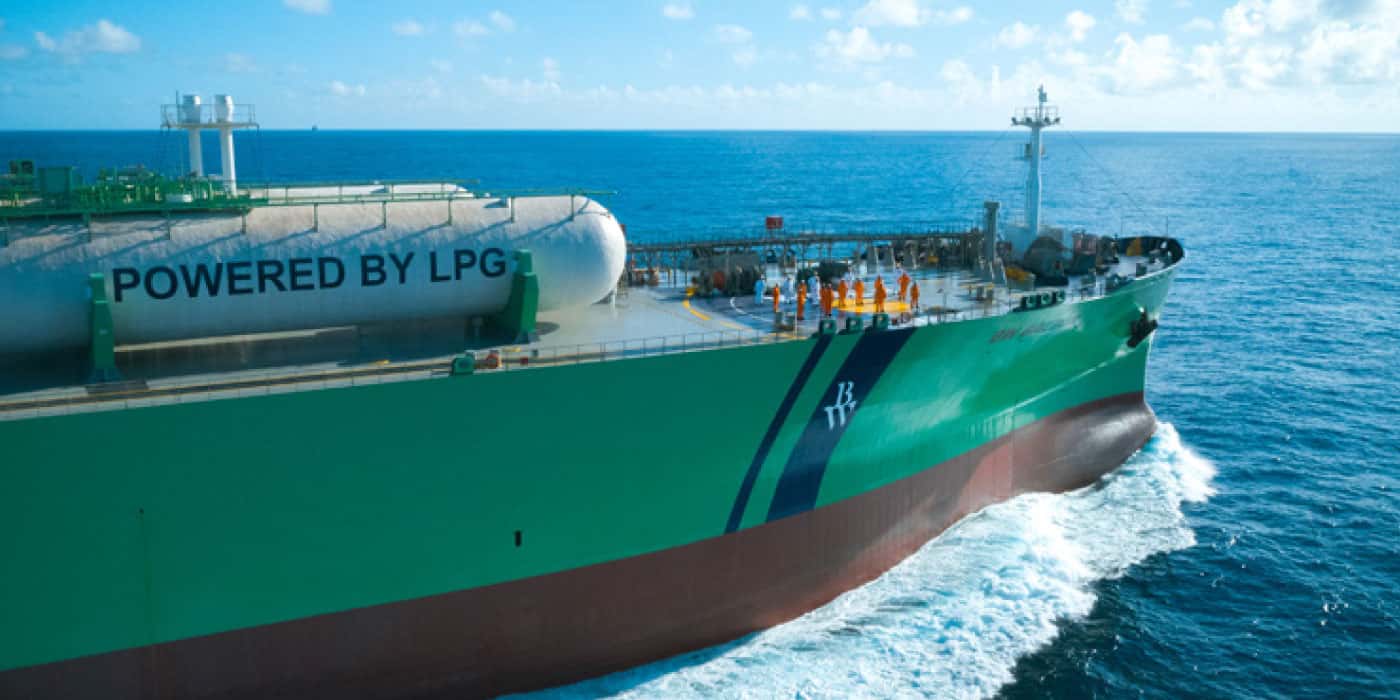 This is where Liquid Gas, particularly LPG and emerging renewable and recycled Liquid Gas pathways, has an increasingly important role to play. Since the first global LPG industry forum in Dublin in 1987, the global Liquid Gas market has grown from roughly 130 million tonnes annually to more than 360 million tonnes today. That scale matters because resilience depends on solutions that are already proven, deployable and globally integrated.
Today, LPG infrastructure spans virtually every region of the world, supporting cooking, heating, industry, transport, petrochemicals and power generation. Liquid Gas combines portability, storability, operational flexibility and existing large-scale infrastructure in ways that few other energy solutions can match.
Unlike many parts of the energy system, global LPG supply does not depend on a single geography or infrastructure pathway. LPG moves through diversified international trade flows, can be stored relatively easily and provides flexible energy supply across both developed and developing economies. That flexibility is becoming increasingly valuable as energy systems become more electrified and more complex.
Electrification will continue to expand across many sectors and regions. However, overdependence on any single pathway creates vulnerability, whether from grid constraints, infrastructure bottlenecks, weather variability, geopolitical exposure or affordability pressures. Resilience requires balance within the broader energy system itself, and LPG helps provide that balance. It supports industrial heat applications where alternatives remain technically difficult or economically challenging. It strengthens energy access in regions where large-scale infrastructure deployment may still take decades. It provides lower-emission alternatives to more carbon-intensive fuels in transport, industry and domestic use. It also supports backup power, peak shaving and distributed energy applications in markets facing electricity system instability or rapid demand growth. Importantly, LPG can do all of this using infrastructure, appliances and supply chains that already exist at global scale.
India provides an important recent example. Faced with growing supply pressures and geopolitical uncertainty, diversification of LPG imports helped strengthen resilience, reduce dependency on single supply regions and improve overall supply flexibility. This is exactly the kind of pragmatic resilience-building many countries are now prioritising.
The future energy system will not be defined by a single technology or fuel. It will be defined by how effectively different solutions work together to deliver security, affordability, flexibility and progressively lower emissions under real-world conditions.
Renewable and recycled Liquid Gas pathways further strengthen this proposition. They create opportunities to progressively reduce lifecycle emissions while leveraging existing LPG infrastructure and consumer systems already deployed around the world. This allows decarbonisation to advance without forcing societies to choose between resilience, affordability and sustainability.
The next phase of the global energy transition will likely be judged on durability as much as ambition. Can energy systems remain secure during geopolitical disruption? Can they remain affordable during periods of volatility? Can they continue supporting economic growth while reducing emissions? These are resilience questions as much as climate questions.
The energy system is under pressure. The response now must be to build systems capable not only of reducing emissions, but also of withstanding disruption and continuing to deliver reliable, affordable and scalable energy under real-world conditions.
Increasingly, Liquid Gas is an important part of the solution.