Resilience in a Changing World: Why Liquid Gas Matters More Than Ever by James Rockall, CEO, World Liquid Gas Association

“Resilience in a Changing World” was chosen as the theme of our current three-year plan. It is now proving to be remarkably prescient.
Across the globe, energy systems are being tested in ways few would have anticipated only a few years ago. Geopolitical tensions, supply disruptions, infrastructure constraints and shifting demand patterns are exposing vulnerabilities and forcing governments and industries to reassess what a secure and reliable energy system truly looks like.
In this context, resilience is no longer a secondary consideration. It is becoming the defining characteristic of successful energy systems.
Updated collateral to deliver relevant content promoting LG applications (ADV 2.2)A resilient energy system is, by nature, diverse. It does not rely on a single source, route or technology. It draws on a mix of energy types, benefits from multiple supply origins, and is supported by infrastructure that is both flexible and scalable. Crucially, it must also be storable and dispatchable, able to deliver energy when and where it is needed.
This is where LPG stands apart.
LPG embodies resilience across every part of its value chain.
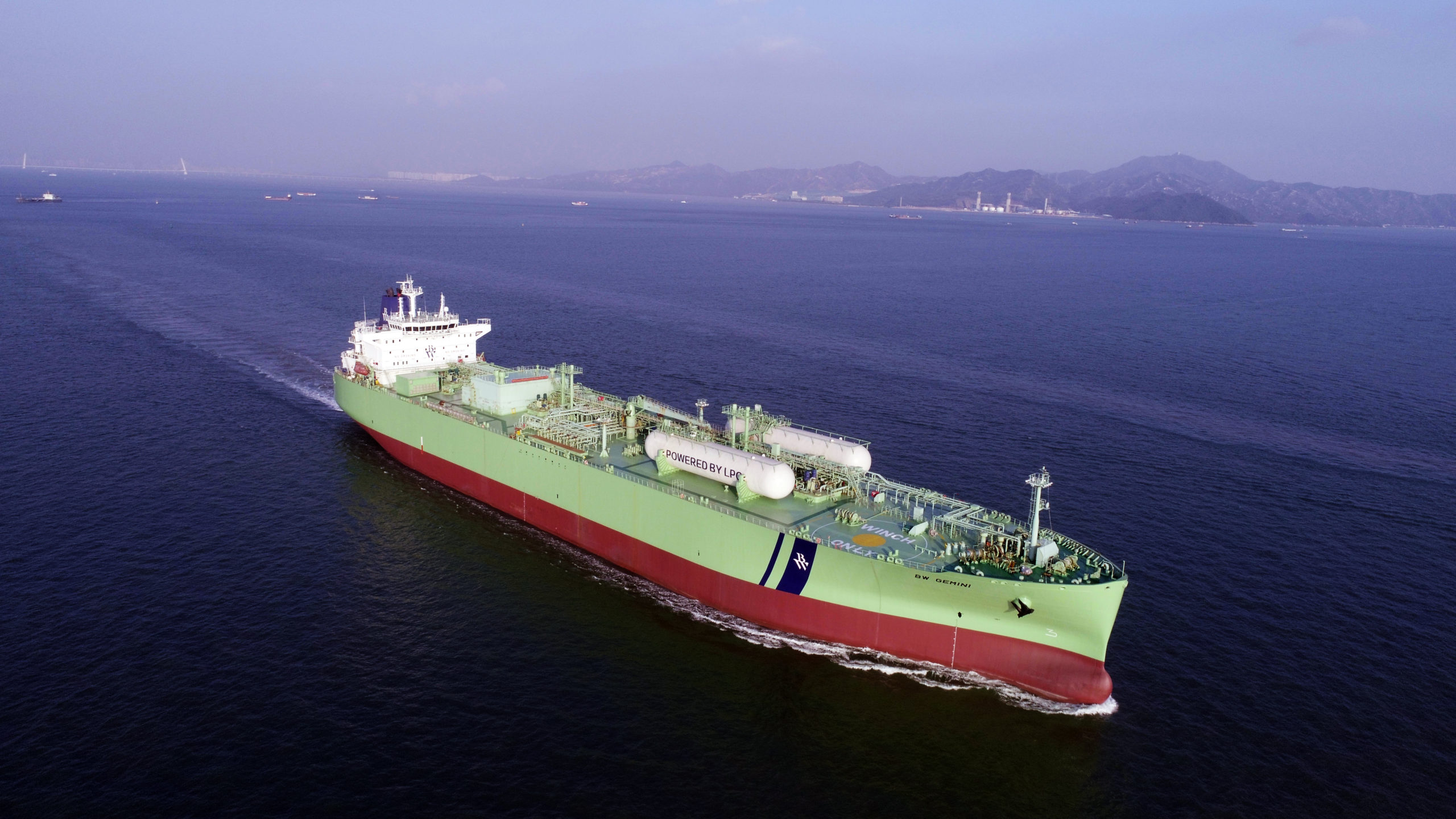
Photo courtesy of BW LPG
Its supply is inherently diverse, sourced from both natural gas production and refining, with an increasing contribution from renewable and recycled feedstocks. This diversity reduces exposure to single-point disruptions and supports stable global trade flows.
Its infrastructure is efficient and adaptable. Compared to alternatives such as LNG, LPG requires significantly lower capital investment, enabling faster deployment and broader accessibility, particularly in emerging markets.
It is also uniquely storable. LPG can be stored indefinitely without degradation, providing a critical buffer against supply shocks and enabling countries and communities to strengthen their energy independence. Many countries already maintain significant LPG storage, including in regions exposed to natural disasters, allowing them to absorb disruptions to international supply chains.
Finally, LPG delivery systems are flexible and proven. From large-scale import terminals to cylinder distribution in remote areas, LPG reaches end users reliably across a wide range of geographies without reliance on vulnerable grid infrastructure.
Resilience also increasingly means environmental sustainability. LPG is already a lower-emission energy compared to many traditional alternatives, and the growth of renewable and recycled Liquid Gas will further strengthen its role in building resilient, future-ready energy systems.
Taken together, these characteristics make LPG not only a practical energy solution, but a strategic one.
As policymakers and industry leaders look to build energy systems that can withstand uncertainty, the importance of resilience will only grow. This means prioritising solutions that combine diversity of supply, flexibility of infrastructure, and the ability to store and dispatch energy efficiently.
LPG delivers on these requirements today. With the continued development of renewable and recycled Liquid Gas, it is also well positioned to contribute to the evolving energy landscape of tomorrow.
In a world defined by change, resilience is no longer optional. It is essential. And LPG is, by design, a resilient energy.