
Building a More Resilient Energy System through Innovation by Donal Murphy, CEO of DCC Energy and WLGA President


As Chief Executive of DCC Energy and President of the World Liquid Gas Association, I have spent time over the past six months in conversation with industry leaders, policymakers and energy stakeholders around the world. Those conversations culminated recently at the inaugural IEA - WLGA LPG Leadership Forum in Paris, bringing together governments, industry and the International Energy Agency to discuss the future of energy resilience, security and accessibility.
There was one question the Forum kept returning to: how do we ensure energy systems are not only efficient, but resilient?
Resilience is not a characteristic of an individual solution; it is a property of a diversified energy system. That diversity, however, must evolve in step with the need to reduce emissions. The objective, therefore, is not to choose between resilience and decarbonisation, but to design an energy transition that delivers both. Decarbonisation without resilience creates vulnerability; resilience without decarbonisation is unsustainable.
"Decarbonisation without resilience creates vulnerability; resilience without decarbonisation is unsustainable."
Donal Murphy, Chief Executive, DCC Energy, President, World Liquid Gas Association
The liquid gas industry is uniquely placed to contribute to energy resilience, security and accessibility. Our products are portable, storable and versatile, already embedded in communities, businesses and economies around the world – qualities that are especially valuable amid periods of disruption. As I said in Paris, energy security is human: it determines whether a household can cook, a clinic can operate, or a business can function.
Why resilience matters now
Geopolitical tensions, fragile supply chains, vulnerable infrastructure and rising energy demand have strengthened the case for more resilient energy systems. Resilience is not only about protecting mature energy systems from disruption. In many parts of the world, it begins with reliable access to modern energy in the first place. For many communities, particularly in emerging economies, that pressure is already a daily reality. Nearly one million people, mainly women and children, die prematurely each year in sub-Saharan Africa from the effects of cooking with traditional fuels1. Moving a household from those fuels to liquid gas can dramatically reduce household emissions, along with immediate health and development benefits2 – a reminder that energy security and decarbonisation can, and must, move together.
For the global liquid gas industry, delivering that kind of security and accessibility has always been part of our purpose. We have adapted to continually changing markets, technologies and policy environments, expanding access to modern energy, improving safety standards and building increasingly sophisticated supply chains. That spirit of innovation remains one of our greatest strengths.
Continual innovation
Innovation in our industry isn't abstract; it's visible in projects moving from pilot to production. We are beginning to move beyond conventional LPG towards lower-emission liquid gases that serve the same diverse energy needs. Biopropane, chemically identical to fossil propane, is already a drop-in replacement for existing LPG infrastructure, cutting lifecycle CO2 emissions by up to 80% depending on feedstock3. Renewable DME (rDME) is scaling in parallel: Flogas Sverige, part of DCC Energy, has successfully inaugurated the world’s first facility for the industrial use of rDME in forging furnaces, in partnership with Björneborg Steel and Swerim4. Ethanol-to-LPG is another promising production process being explored, as is the production of Biopropane or rDME via gasification of waste feedstocks or reforming of biomethane. Looking further ahead, synthetic LPG produced from renewable hydrogen and captured carbon could offer another route to lower-emission propane and butane.
Together, these developments can strengthen system resilience by broadening the range of lower-emissions energy options available, diversifying sources of supply and reducing dependence on any single fuel, feedstock, technology or infrastructure pathway.
"Innovation isn't abstract; it's visible in projects moving from pilot to production."
Donal Murphy, Chief Executive, DCC Energy, President, World Liquid Gas Association
Innovation is also about how we build energy systems capable of absorbing disruption, wherever it occurs.
Resilient energy systems are built, not assumed
The landscape around us continues to shift. Energy demand is growing, while expectations on sustainability are rising. Governments are paying closer attention to energy security. Customers want solutions that are reliable, affordable and increasingly lower-carbon.
From my perspective, a resilient energy transition requires policymakers to look beyond any single technology and apply five practical principles:
- Design policy to balance decarbonisation, resilience and affordability
- Diversify energy sources, infrastructure and supply chains
- Deploy renewable drop-in solutions wherever existing infrastructure can accelerate decarbonisation
- Develop emerging technologies through stable, long-term policy support.
- De-risk the transition by avoiding new strategic dependencies on critical materials, technologies or imports.
Meeting all of this will take sustained investment, creativity and collaboration, which is exactly why engagement between industry, governments and organisations like the IEA matters.
The Paris Forum demonstrated that value directly: while participants didn’t align on every point, there was agreement that resilient energy systems are essential for economic growth, energy security and human development.
Delivering resilient energy, together
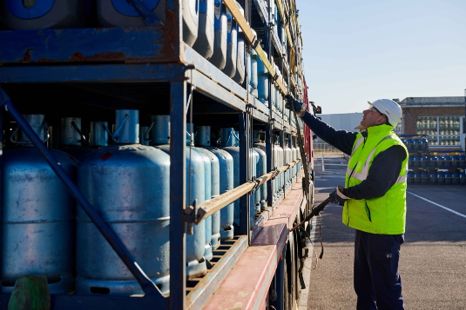 As an industry, we have delivered energy reliably in some of the world's most demanding environments before, and we remain confident in our ability to do so again. The task now is to carry that record forward while building systems that are more resilient, more accessible and increasingly sustainable.
Resilience is not about predicting every shock, it’s about designing systems that can absorb shocks without abandoning the people who depend on them. That is the work ahead of us, and the liquid gas industry intends to keep playing its part.
1 https://www.iea.org/reports/universal-access-to-clean-cooking-in-africa/executive-summary
2 https://www.worldliquidgas.org/key-focus-areas/cooking/
3 https://www.worldliquidgas.org/key-focus-areas/renewable-liquid-gas/